Astrophotography Banner 1 - 3I/ATLAS Imaging Astrophotography Banner 2 - PixInsight Processing Astrophotography Banner 3 - NINA Setup Astrophotography Banner 4 - Deep Sky Capture

Telescopes

Over the years, I’ve worked with a variety of telescopes — each chosen for a specific purpose. From long-focus reflectors for lunar work to fast astrographs for deep-sky imaging, each one brings a unique capability to my observatory setup.

Refractors are great maintenance-free telescopes; however, good ones usually cost a small fortune. Great ones even more. I was lucky enough to purchase my TOA130F in Japan from Starbar at Akihabara.

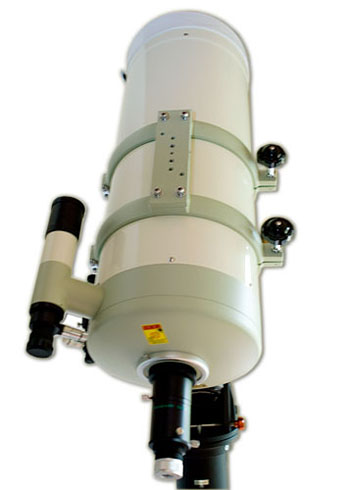
Takahashi TOA-130F

The Takahashi TOA-130F is a flagship triplet apochromatic refractor, delivering incredible optical precision and color correction. Designed for the most demanding astrophotographers, the TOA-130F is equally at home capturing high-resolution galaxies or wide-field nebulae. Its optical design eliminates chromatic aberration and produces textbook diffraction-limited star profiles.

Together with the dedicated reducer and spacer rings you can access 4x different focal length and ratios. I normally use it at either F7 native or F5.6 with the reducer.

Takahashi TOA-130F

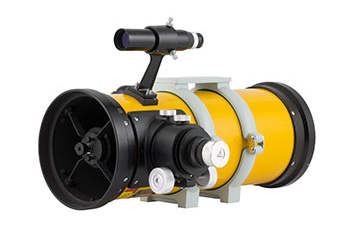
Takahashi Mewlon 250M

The Mewlon 250M is a Corrected Dall–Kirkham Cassegrain renowned for its razor-sharp contrast and precision optics. With a 250mm aperture and long focal length, it excels at lunar and planetary imaging while still being capable of deep-sky observations with narrowband filters.

This has the additional corrector built into the baffle tube, making it a CDK or Corrected Dall–Kirkham telescope.

Furthermore, it was also specially made for me. Normal Mewlons have a mounting puck and counter-weight system at the bottom of the tube. Mine does not. It is a special tube-ring version where only a few were made, and mostly for our American cousins. This is probably the only one here in Europe.

Takahashi Mewlon 250M

Takahashi Epsilon 130ED

The Epsilon 130ED is a fast f/3.3 astrograph optimized for wide-field astrophotography. Its hyperbolic primary mirror and integrated corrector produce an exceptionally flat field and pinpoint stars across full-frame sensors — perfect for capturing large nebulae and Milky Way vistas.

My first Epsilon was bought second-hand from Gavin in London, came complete with tube rings, dew shield and adapter. Wow, just wow — this small compact astrograph really packs a punch. Its biggest advantage is its aperture; I can never go back to a small refractor again.

Takahashi Epsilon 130ED

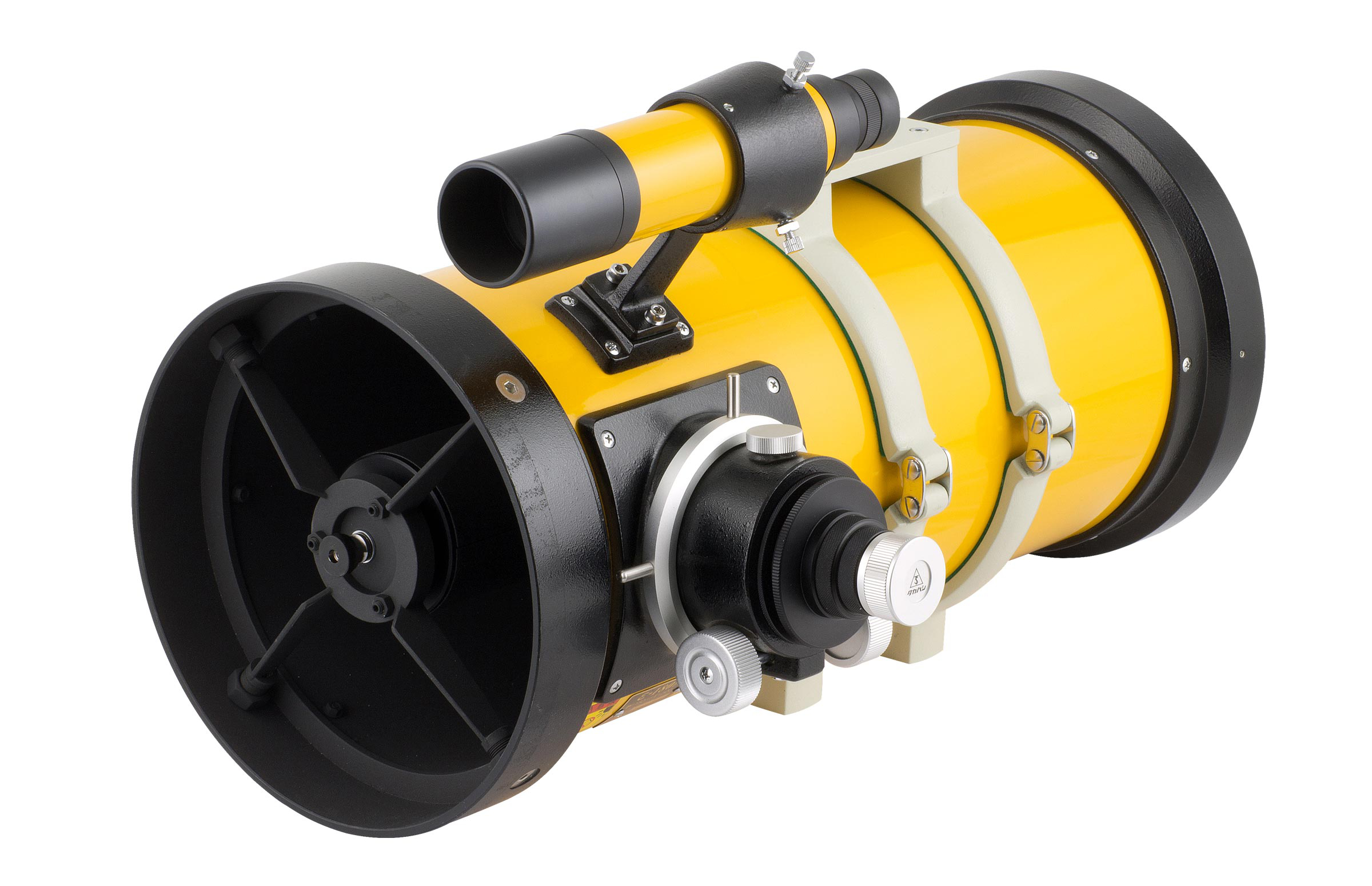
Takahashi Epsilon 180ED

Built for speed and precision, the Epsilon 180ED is an f/2.8 astrograph that has achieved legendary status among deep-sky imagers. Its large aperture and fast optics make it ideal for faint nebulosity and expansive star fields, all while maintaining corner-to-corner sharpness.

It took several attempts and nearly 5 years to find one, and then it was not in the best condition aesthetically. Together with my son, this one was restored to as-new, if not better, condition. It is the best-painted Takahashi Epsilon in the world — polyester powder-coated tube rings and a professional color-matched painted tube with a 2K clear coat.

Takahashi Epsilon 180ED

Omegon 355mm Ritchey–Chrétien

The Omegon 355mm RC is a professional-grade astrograph with zero coma and an ultra-flat field. Its 355mm aperture and f/8 optics deliver exceptional resolution for galaxy imaging and narrowband astrophotography. The carbon-fiber truss design ensures rigidity and thermal stability during long imaging sessions.

I use my system with an Astro-Physics reducer — this brings the system down to a much more manageable F6 for Dutch sky conditions.

I love imaging galaxies with this telescope. There are literally thousands of galaxies in the night sky for me to image. Galaxies are my passion; they are why I am here and love the hobby so much.

Omegon 355mm Ritchey–Chrétien

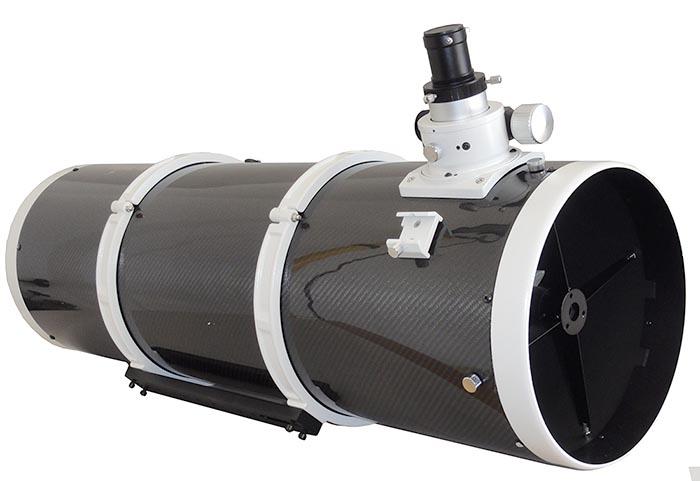
Sky-Watcher Quattro 250mm

The Sky-Watcher Quattro 250mm f/4 Newtonian offers outstanding performance and value. Designed for astrophotography, its fast focal ratio and parabolic primary mirror provide bright, wide-field images. It’s a favorite among imagers transitioning to larger apertures without sacrificing portability.

This is a special Sky-Watcher, again purchased second-hand in Belgium. It came with some modifications already done. The mirror was checked with a 7-zone mask and confirmed to be better than 1/11th wave — nearly 1/12th! I can confirm its quality as it performs as well as my Takahashi telescope.

I have continued the modification by flocking it and adding a dedicated secondary mirror heater.

The next step is to replace the focuser with a new low-profile version to be able to use the Nexus reducer-corrector at x0.75.

Sky-Watcher Quattro 250mm

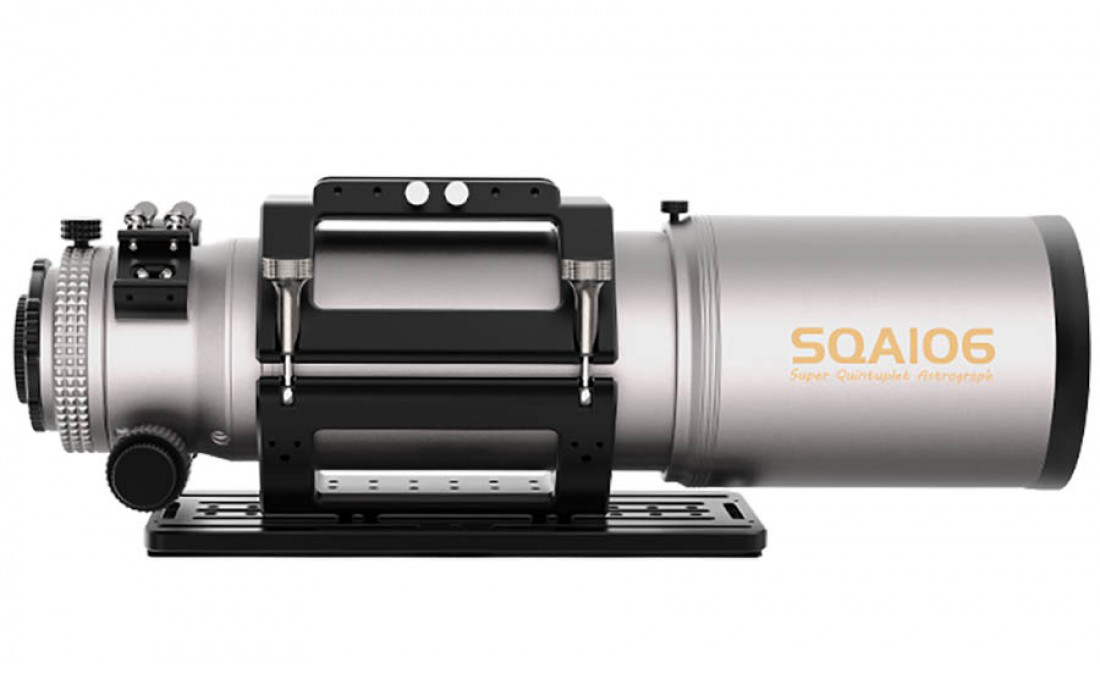
Askar SQA106 APO

The Askar SQA106 is a quadruplet refractor with a permanently integrated field flattener, offering crisp, flat images across full-frame sensors. Its 106mm aperture and 600mm focal length provide an ideal balance between field width and resolution for deep-sky imaging.

Being a self-confessed Takahashi fan-boy, I would have loved to have bought an FSQ106. I had previously owned the FSQ85 or "Baby Q", which I sold and still regret selling.

Then Askar launched their SQA series with some excellent specifications. Specifications are one thing, right? I put this up against my Epsilon180ED and it held its own. Below is a YouTube review of the scope in action.

Askar SQA106 APO